Tensor Cores
How NVIDIA Tensor Cores work, from the first FP16 units in Volta to FP4 in Blackwell: matrix multiply-accumulate, precision and throughput explained.
Tensor Cores, explained from first principles
Tensor Cores are the matrix-multiply engines inside NVIDIA GPUs and the main reason a modern GPU can train and run AI models. This section explains what they compute, how each generation from Volta to Blackwell changed them, and how number formats such as FP16, FP8 and FP4 make them faster.
New to the topic? Read the guides below in order. Each one builds on the last and links to tools that let you try the numbers yourself.
Start here
Tools for this topic
Edited by Sami Ullah Khan. Read our editorial policy.
All Tensor Cores articles
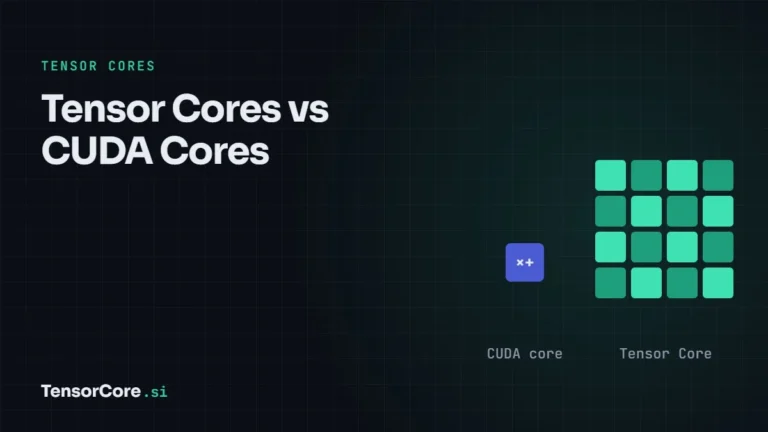
Tensor Cores vs CUDA Cores: What's the Difference?
CUDA cores do one multiply-add on single numbers; Tensor Cores do a whole matrix tile at once. Here is how they differ, how much…
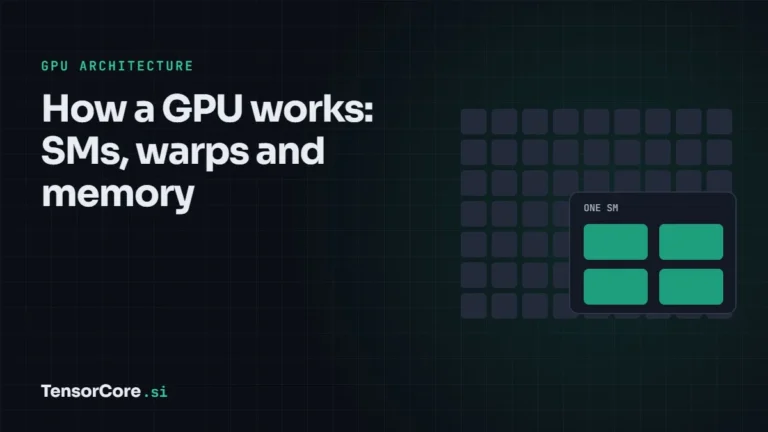
How a GPU Works: SMs, Warps and the Memory Hierarchy
A tour of a modern NVIDIA GPU from the top down: streaming multiprocessors, warps of 32 threads, registers, shared memory, L2 cache and HBM,…