AI Chips
NVIDIA H100, H200, B200, B300 and Rubin, plus AMD Instinct and Google TPU, compared on compute, memory and what they are built for.
AI chips compared: NVIDIA, AMD, Google, AWS, Intel and Groq
Head-to-head comparisons and explainers for the chips that train and run AI, from the NVIDIA H100 to Rubin, AMD Instinct, Google TPUs, AWS Trainium, Intel Gaudi and Groq LPUs. Every specification is given per chip and without sparsity, and links to the vendor's own documentation.
Learn to read a spec sheet first, then compare generations and vendors, or open the specs database to compare 28 chips side by side.
Start here
Tools for this topic
Edited by Sami Ullah Khan. Read our editorial policy.
All AI Chips articles
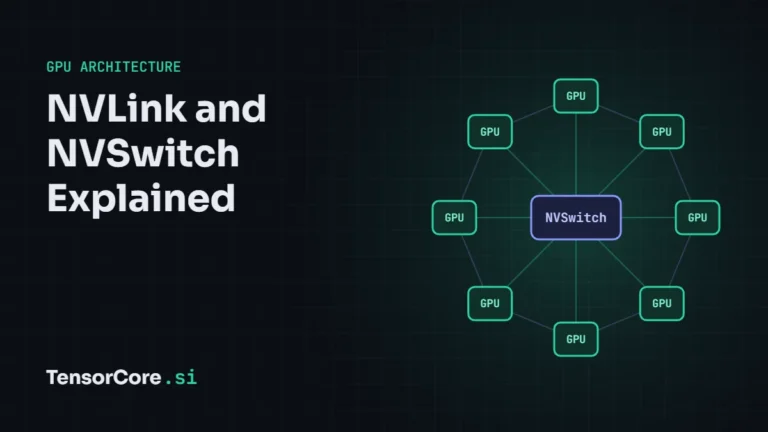
NVLink and NVSwitch Explained: How AI GPUs Talk to Each Other
NVLink connects GPUs at up to 1.8 TB/s and NVSwitch lets 8 to 72 GPUs talk at full speed. Generations, NVL72, all-reduce math and…
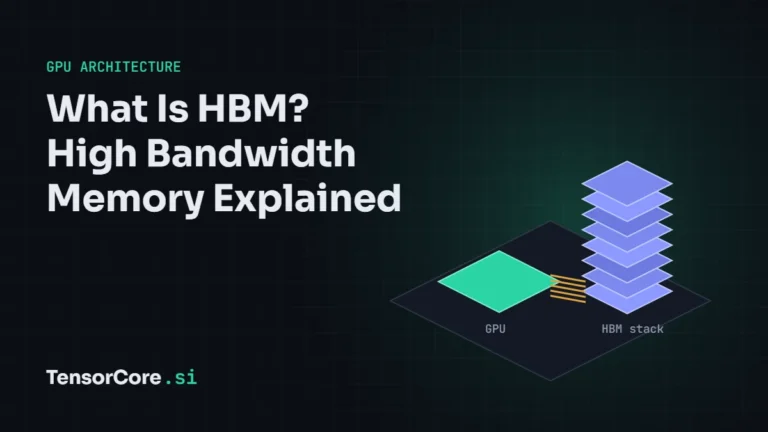
What Is HBM? High Bandwidth Memory for AI GPUs Explained
HBM stacks DRAM dies beside the GPU on a 1,024-bit bus per stack. Learn how it works, every generation from HBM2 to HBM4, and…
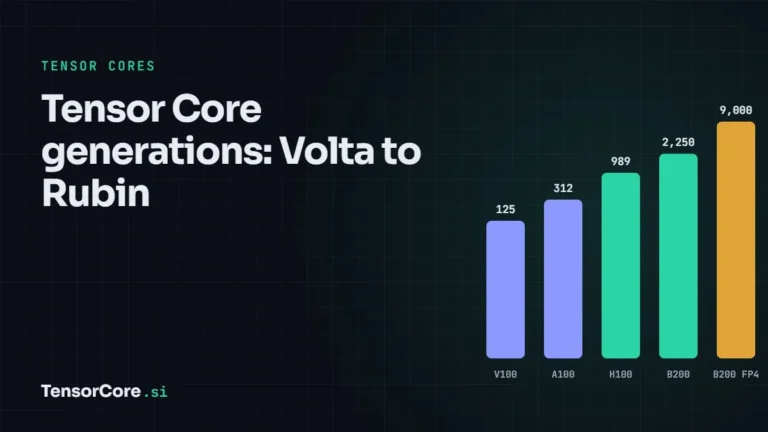
Tensor Core Generations: From Volta to Blackwell and Rubin
Every NVIDIA Tensor Core generation from 2017 to 2026: the GPUs, the new number formats, the peak throughput and the one big idea each…
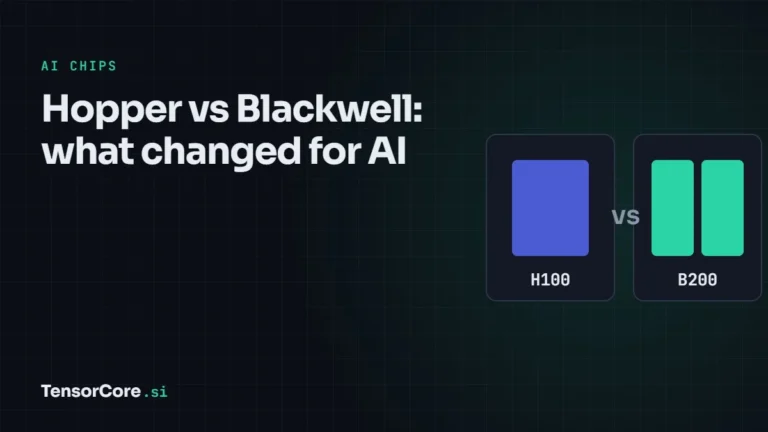
Hopper vs Blackwell: What Changed for AI
H100 and H200 against B200 and B300: memory, bandwidth, FP8 and FP4 throughput, NVLink, and what the differences mean for training and for serving…