 Edited by
Short answer
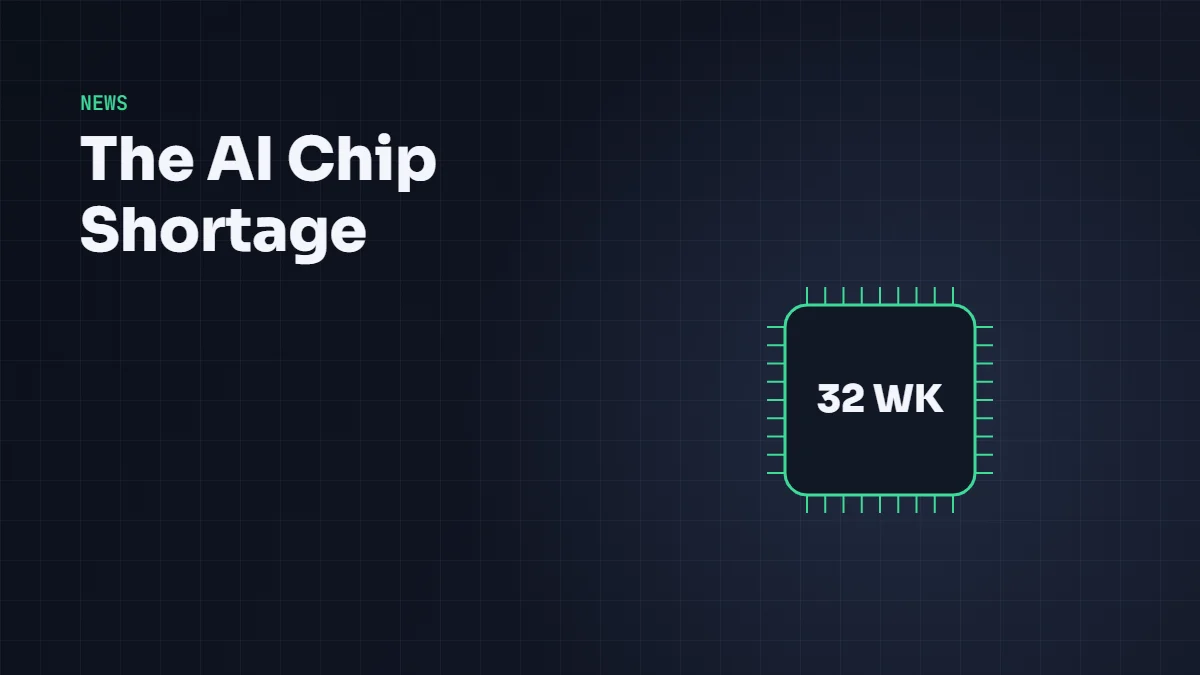
A new semiconductor shortage is building, and this time AI is the cause. On November 5, 2026, Microchip Technology said lead times for standard products that used to ship in four to eight weeks now range from six to 32 weeks, because AI customers have taken over packaging and test capacity at its suppliers. A week later, Nexperia said it is "totally oversubscribed" and STMicroelectronics warned of "many bottlenecks," as foundries and packaging houses shift resources from mature automotive and industrial chips to AI data centers.
What Microchip said
Microchip, which makes microcontrollers and other everyday chips used in cars, factories and appliances, reported its September-quarter results on November 5. Sales rose 42.2% from a year earlier to $1.622 billion, above its own forecast, but CEO Steve Sanghi said the company could have shipped more.
According to Sanghi, AI companies "came in and took over the whole factory. They pushed everybody out." The specific problems he described:
- Packaging and test lines: data center buyers took capacity at outside assembly and test companies (OSATs).
- Substrates: some substrates, the bases that chips are mounted on, are unavailable.
- Trailing-edge capacity is tight: older manufacturing processes used for everyday chips are in short supply.
- Slow fixes: moving work in-house or to other suppliers takes about six months.
Lead times for standard products went from four to eight weeks to six to 32 weeks. Sanghi also said most major foundries and OSATs are expected to raise prices again around January, and that Microchip plans to absorb the increases for now.
Microchip is benefiting from AI too: its data center revenue topped $250 million in the quarter, up 55.7% year on year. Its shares still fell sharply during a wider chip-stock selloff that week.
Nexperia and STMicroelectronics warn of bottlenecks
At the Electronica trade fair in Munich, Nexperia's interim CEO Stefan Tilger told Reuters the company is "totally oversubscribed." He said suppliers are moving capacity toward AI data centers and away from the mature chips used in cars and industrial equipment, and that some competitors have shifted away from the commodity semiconductors Nexperia supplies. "The automotive industry is suffering at the moment quite heavily," he said. He added that demand from AI data centers and robotics is absorbing capacity, while investment in mature technologies such as diodes and transistors has lagged for years.
STMicroelectronics CEO Jean-Marc Chery said at a CEO panel before the fair that foundries and packaging companies are moving resources away from automotive and industrial products. "We see many bottlenecks," he said. ST, which runs much of its own manufacturing, said that gives it some protection.
Why AI is causing shortages of non-AI chips
AI accelerators like NVIDIA's Blackwell GPUs or Google's TPUs are made on the most advanced processes, so why would they affect simple chips made on old ones? Because they share parts of the supply chain:
- Advanced packaging and test: AI chips need complex packaging, such as placing HBM memory stacks beside the processor, and extensive testing. That pulls equipment, staff and materials from the same companies that package ordinary chips.
- Substrates: high-end AI packages use large, complex substrates, competing for supply with everyday products.
- Supporting chips: every AI server rack also needs power management chips, controllers, sensors and networking parts, many of them made on mature processes. Building huge AI data centers multiplies demand for these.
- Profitability: with AI customers willing to pay more, suppliers prioritise them.
How this compares with the 2021 shortage
The 2020 to 2022 chip shortage was triggered by pandemic disruption and a sudden surge in demand for electronics, and it famously halted car production lines. The 2026 squeeze is different: it is driven by one fast-growing customer group, AI infrastructure, competing for limited packaging, test and mature-node capacity. Carmakers are again among the most exposed, because they rely on large volumes of low-cost mature chips.
What happens next
- Prices: expect higher chip prices in early 2027 if foundries and OSATs raise prices as Microchip expects.
- Capacity: new packaging and mature-node capacity takes many months to add, so relief is unlikely to be quick.
- AI spending: Microchip's CEO noted that some slowing of AI demand would actually help other customers in the short term. Whether AI infrastructure spending keeps accelerating is the key variable.
Sources
- 24/7 Wall St. via Yahoo Finance, The chip shortage is back, and Microchip says AI customers are crowding everyone out (November 7, 2026)
- Reuters via Claims Journal, Chipmakers warn AI demand is creating bottlenecks in automotive supply chain (November 12, 2026)



Leave a Reply